Written by
Kelsey Frey
Updated on
Yellowstone is right in Bozeman's backyard: From Bozeman, you're looking at about 90 minutes to the North Entrance in Gardiner or two hours to the West Entrance in West Yellowstone, which means there's no excuse not to go. Whether you're chasing geysers, looking for wildlife, or just need a serious leg day, the best hikes in Yellowstone deliver on all fronts.
Here's our trail breakdown, from breezy and flat to legitimately hard. All distances are round trip unless noted.
Easy Hikes in Yellowstone (Great for Families & First-timers)
These are the best hikes in Yellowstone for families and anyone easing into the park. They're short, accessible, and still pack serious wow factor. If you're traveling with young kids or just want a chill afternoon, start here.
1. Grand Prismatic Spring Overlook
Distance: 1.2 miles
Elevation gain: 206 ft.
Section of park: Midway Geyser Basin
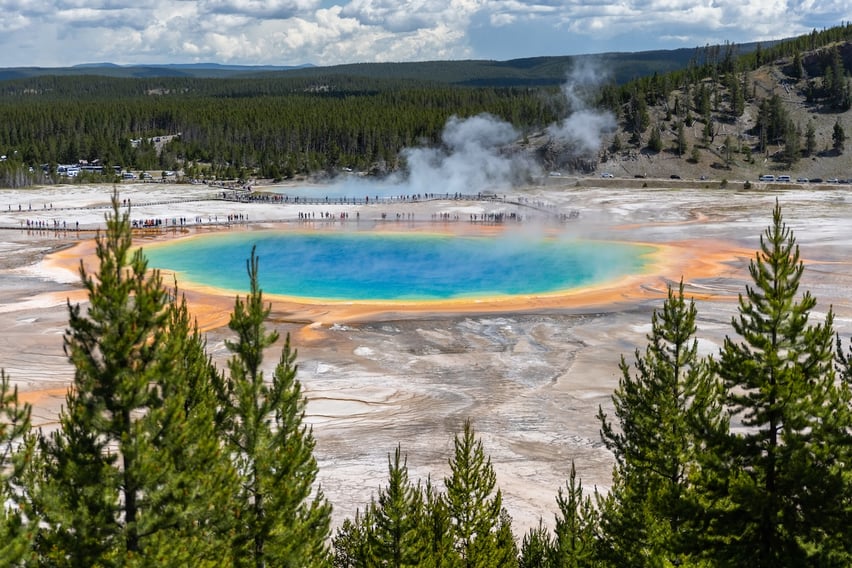
This short, out-and-back trail takes you to one of the most photogenic spots in the park. While walking along the boardwalks gives you a closer view of the spring itself, the Grand Prismatic Overlook Trail is one of the best day hikes in Yellowstone, which gets you that iconic bird's-eye view of the rainbow-colored hot spring you've seen on every Yellowstone screensaver.
This trail has some incline but nothing that'll slow you down, making it one of the most family-friendly hikes in the park. If you're only going to do one hike in the park, choose this one.
2. Mystic Falls
Distance: 2.4 miles
Elevation gain: 147 ft.
Section of park: Upper Geyser Basin
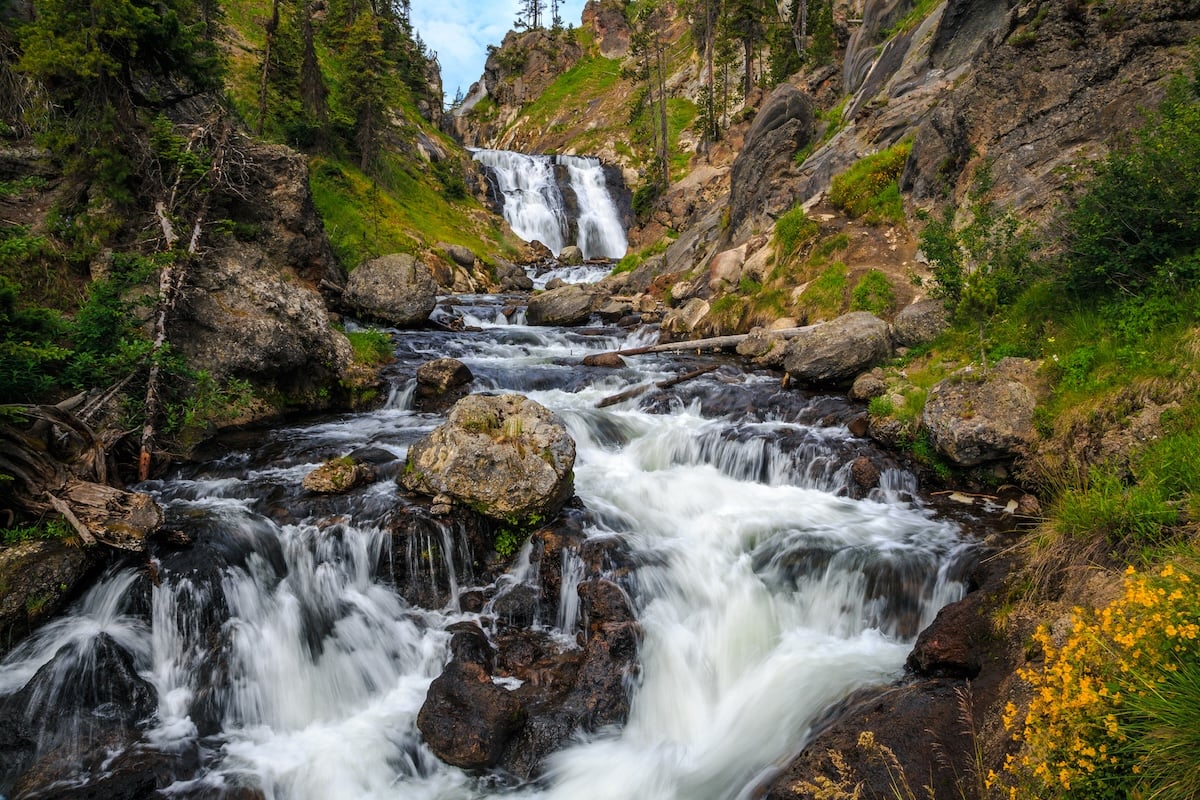
The out-and-back trail to Mystic Falls gives you solid waterfall payoff for minimal effort. The trail winds through mixed conifer forest and delivers you to a 70-foot cascade. For even more views, keep climbing the switchbacks past the falls for an overlook of the Upper Geyser Basin (which adds 1.5 miles).
| Planning a trip to Bozeman? Download our Travel Guide for tips on where to stay, how to get around, and local events in town! |
3. Norris Geyser Basin Loop
Distance: 2.9 miles
Elevation gain: 180 ft.
Section of park: Norris Geyser Basin
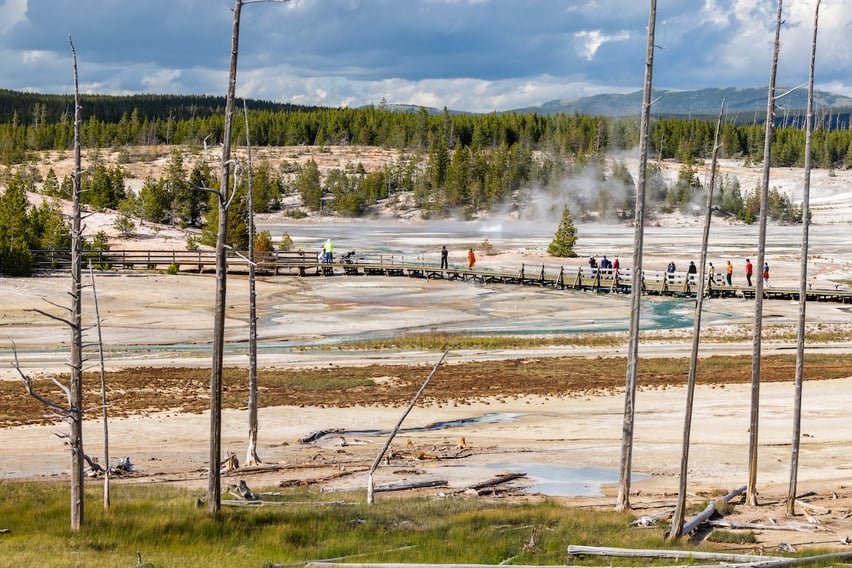
The Norris Geyser Basin Trails (there are two connected loops) are more relaxing than your standard hike, but they should still be on your must-hike list.
Norris is the hottest and most dynamic thermal area in the park, featuring fumaroles (opening in the ground that emits steam and other gases), geysers, and hot springs. You'll find Steamboat Geyser here — the world's tallest active geyser.
4. North Rim Trail, Red Rock Point, Lookout Point, and Grand View
Distance: 2.2 miles
Elevation gain: 400 ft.
Section of park: Canyon Village
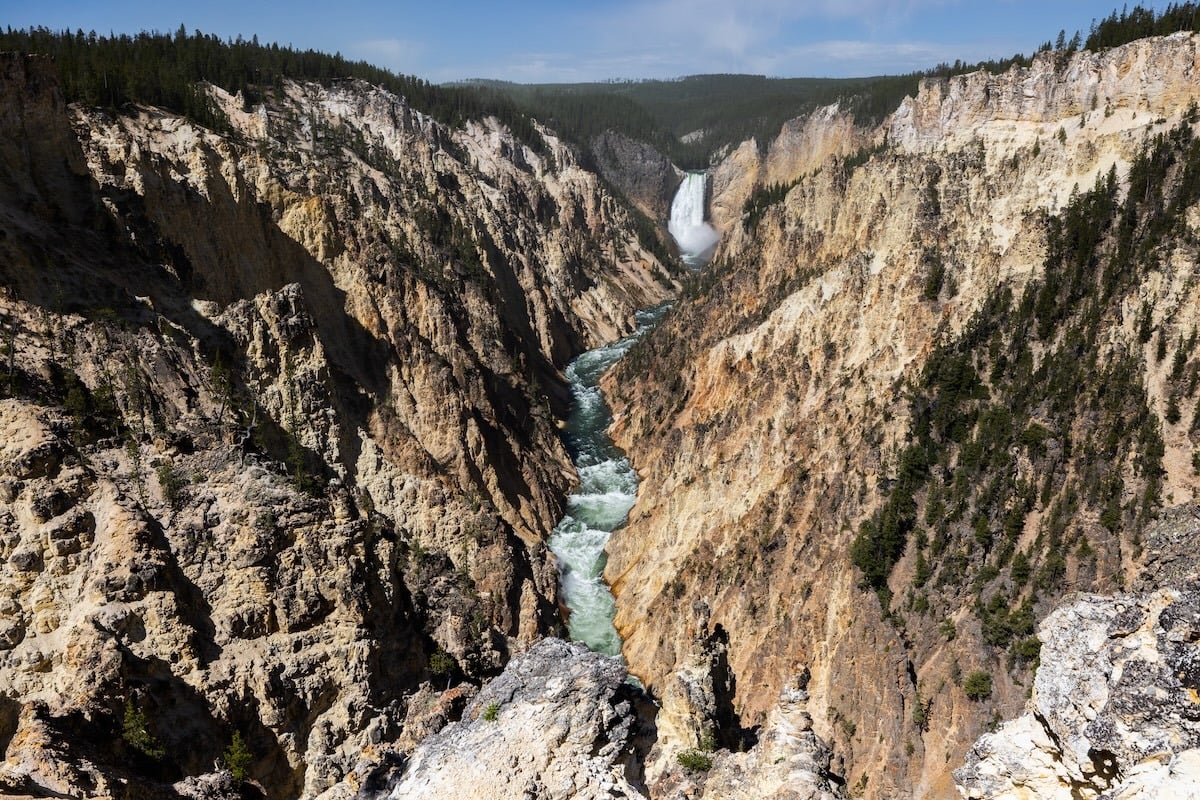
Head to the Grand Canyon of the Yellowstone, where you'll come to numerous trails, including the North Rim Trail, which connects to several popular lookout points. This relatively short, out-and-back trail takes you to incredible views of the falls and canyon.
Another popular, although more difficult, trail in this area is the 0.8-mile Brink of the Lower Falls Trail. Although arguably one of the best short hikes in Yellowstone, this trail drops 600 feet in just about a half mile. It's worth it, though — you'll get great views of the falls and canyon below.
Moderate Day Hikes in Yellowstone
Yellowstone's moderate day hikes tend to be less crowded as they're longer and have more elevation gain. However, the payoff is worth it!
5. Fairy Falls
Distance: 5.4 miles
Elevation gain: 167 ft.
Section of park: Midway Geyser Basin
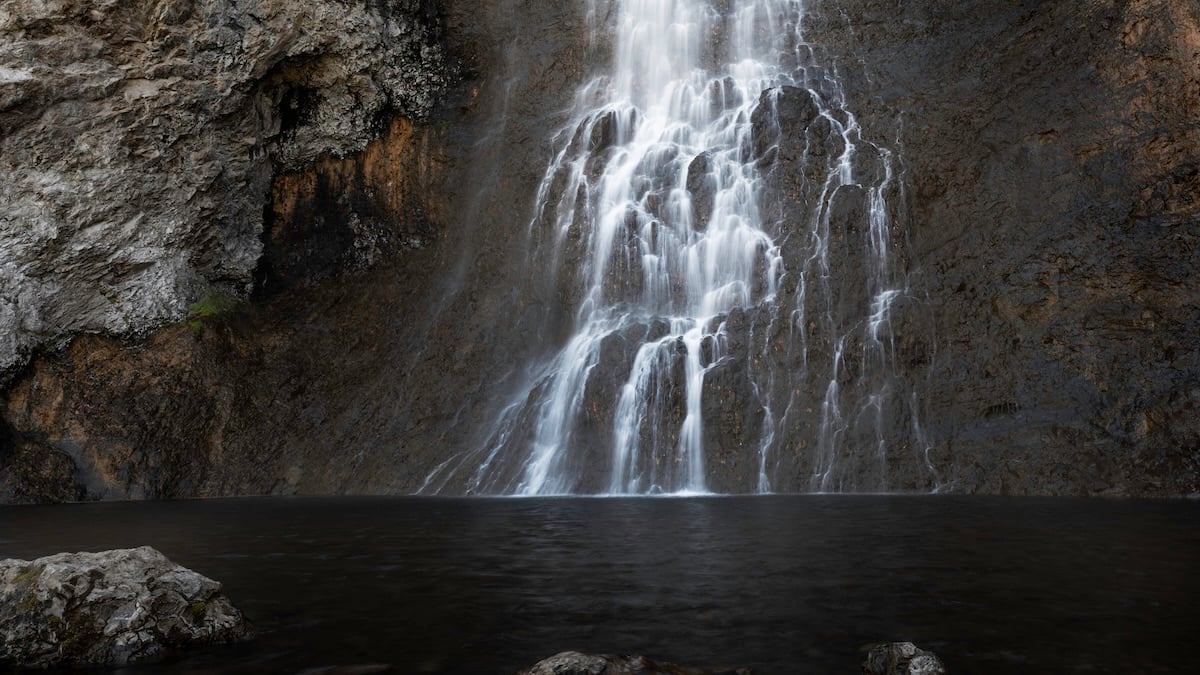
The Fairy Falls Trail takes you to a seriously epic spot — at 200 feet, Fairy Falls is one of the tallest waterfalls in the park.
You can continue past the falls to Spray and Imperial geysers, adding about 1.2 miles to your total mileage. Or, tack on the Grand Prismatic overlook from the other side, which makes this a serious bang-for-your-buck combo.
6. Mammoth Hot Springs Terraces
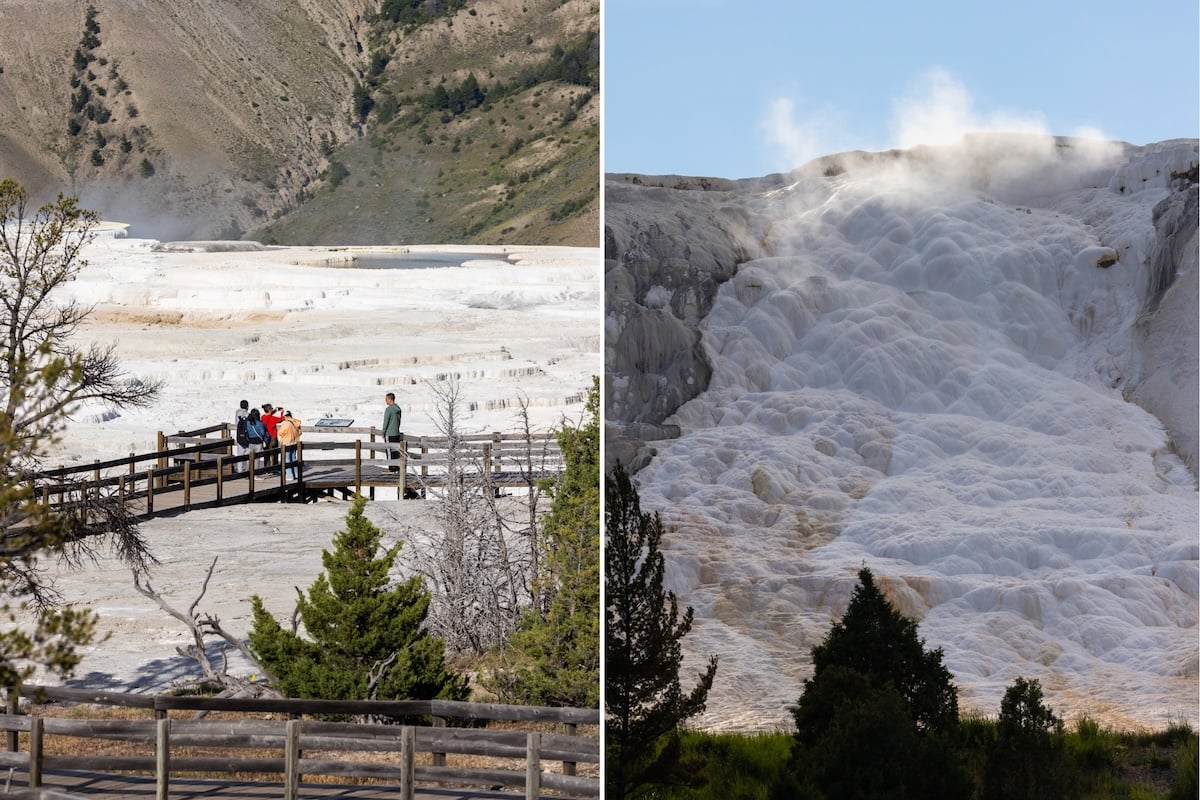
Distance: 1.5 to 5 miles, depending on route
Elevation gain: About 321 ft.
Section of park: Mammoth Hot Springs
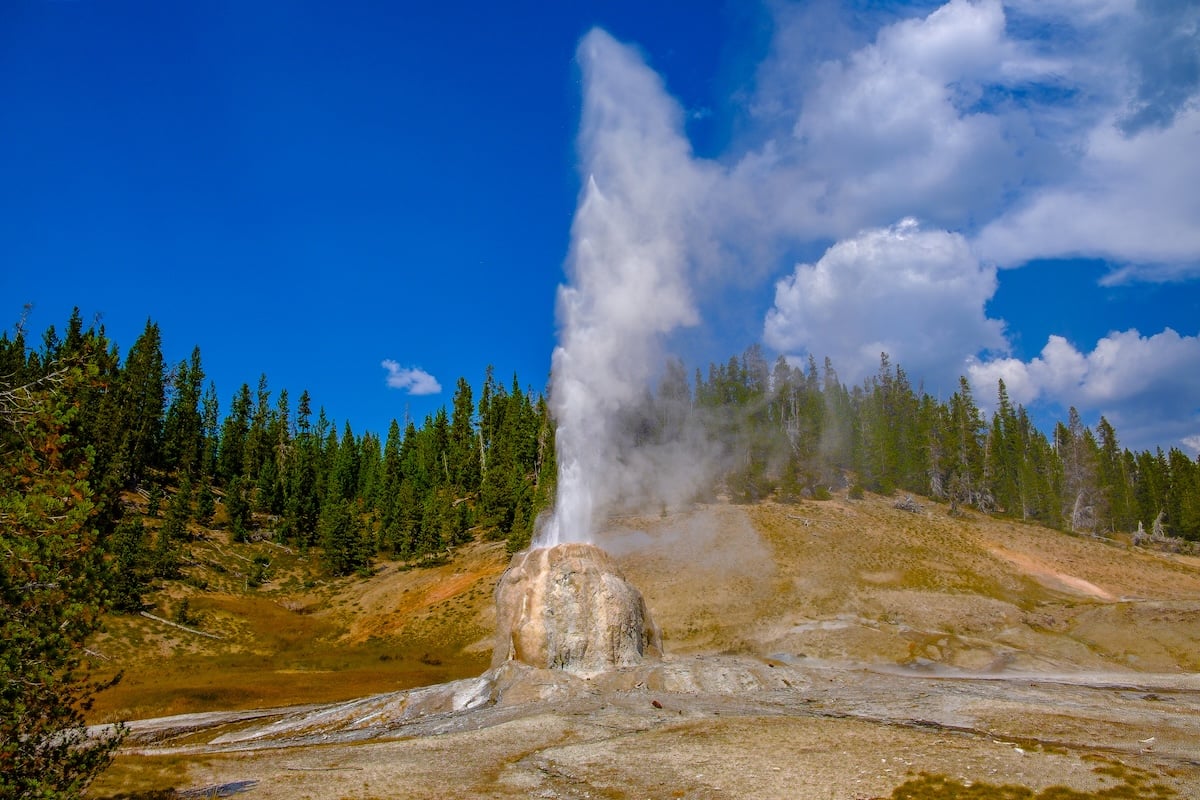
7. Lone Star Geyser
Distance: 4.8 miles
Elevation gain: 127 ft.
Section of park: Upper Geyser Basin
The Lone Star Geyser Trail takes you along a partially paved out-and-back trail to its namesake geyser, which erupts roughly every three hours and is one of the few backcountry geysers in the park. The trail follows the Firehole River the whole way, which makes it beautiful even if you miss the eruption.
Hard Hikes in Yellowstone for Strong Hikers
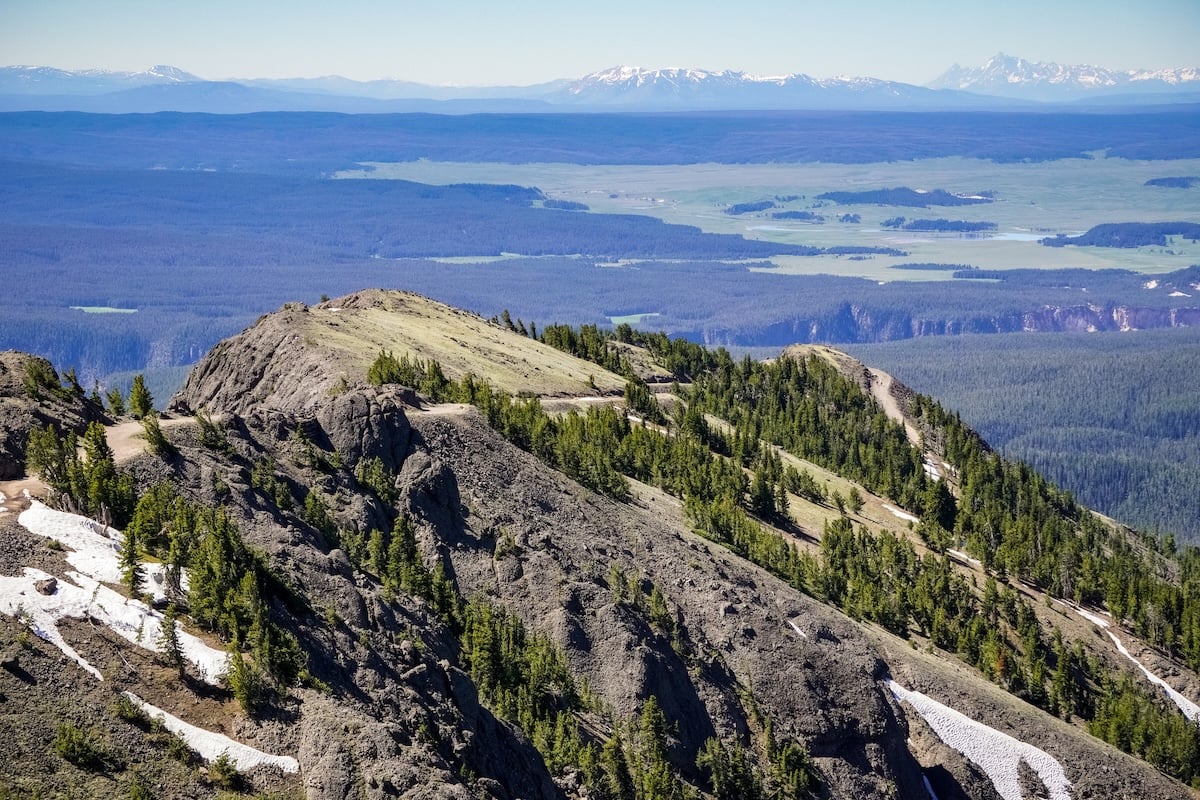
8. Dunraven Pass to Mount Washburn
Distance: 6 miles
Elevation gain: 1,400 ft.
Section of park: Canyon Village
Dunraven Pass to Mount Washburn is the most popular hard trail in the park for good reason: the summit views stretch across the entire caldera. On a clear day you can see the Tetons and other features of the park, like the Grand Canyon of the Yellowstone and Yellowstone Lake. Bighorn sheep sometimes hang out near the fire lookout at the top, making this hike a great spot to see one of the rarer animals you might see in Yellowstone.
9. Black Canyon of the Yellowstone
Distance: 21.6 miles one way
Elevation gain: 3,231 ft.
Section of park: Mammoth Hot Springs
Black Canyon of the Yellowstone Trail runs along the Yellowstone River through a dramatic basalt canyon. You can either treat it as an out-and-back trail and turn around when you're tired, do it as a point-to-point overnight expedition (you'll need a permit if you camp in the park), or tackle it as a long day. If you choose the point-to-point option, you'll need to coordinate a car shuttle.
10. Avalanche Peak Trail
Distance: 4.7 miles
Elevation gain: 2,083 ft.
Section of park: Yellowstone Lake
Avalanche Peak is a difficult out-and-back trail that climbs through dense forest and open wildflower meadows. The short but steep hike takes you to a exposed, windswept summit with sweeping views over the Yellowstone backcountry.
Tips for Hiking in Yellowstone
- Bear spray is non-negotiable for staying safe in the park. Carry it, know how to use it, and ensure each person in your group has a can and keeps it accessible.
- The North Entrance at Gardiner is the only year-round entrance accessible to cars and the closest to Bozeman.
- Cell service is basically nonexistent inside the park. Download your maps before you go or download the NPS app, where you'll be able to download an offline version of Yellowstone National Park.
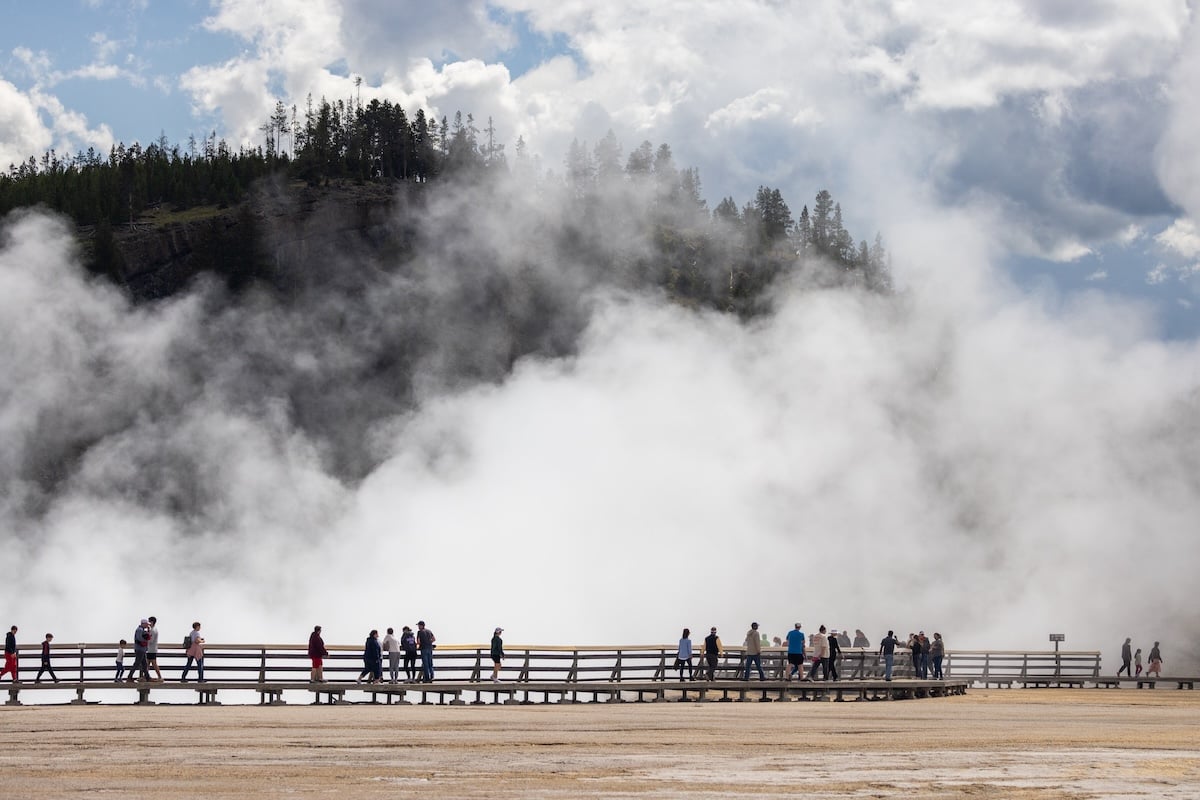
- Summer weekends get crowded. Go early, go on weekdays, or choose lesser-known trails to beat the masses.

If you enjoyed this blog, take a look at some of our other related articles: